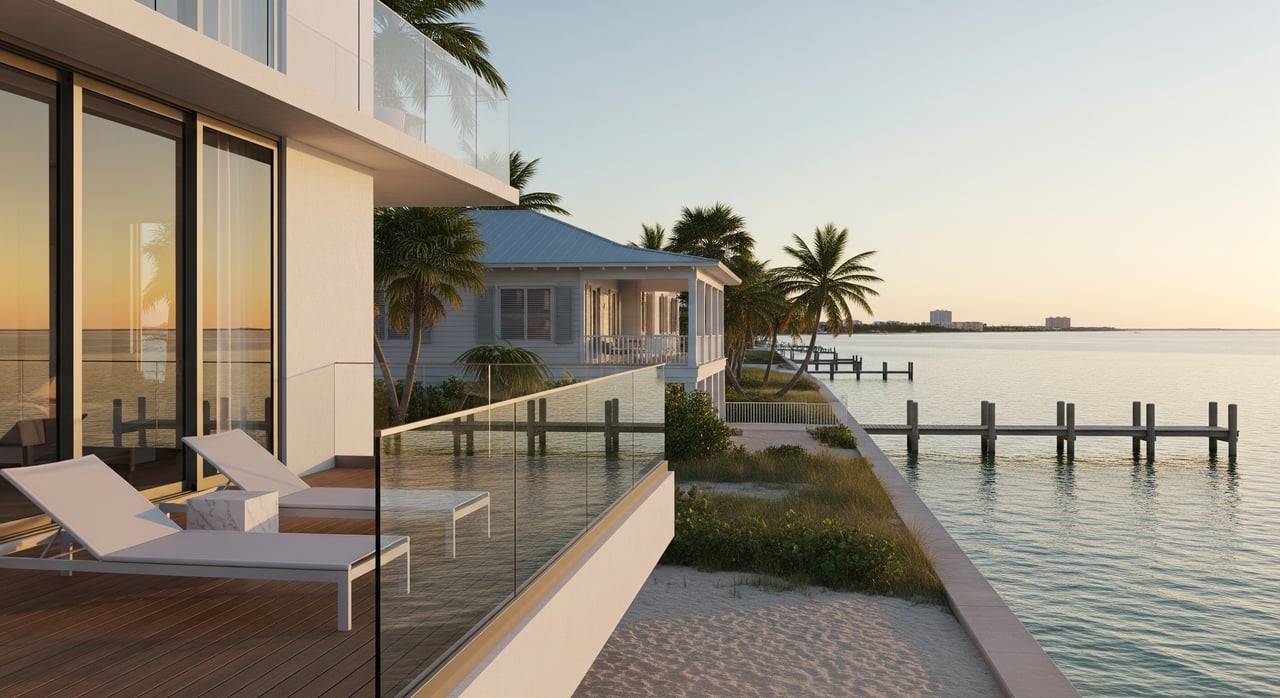
Is Treasure Island calling your name, but you are torn between a waterfront condo and a single-family home? You are not alone. Many buyers weigh convenience and amenities against privacy and control, especially on a barrier island like Treasure Island where the waterfront lifestyle is the star. In this guide, you will learn how ownership, docks, insurance, maintenance, rentals, and resale perform in each option so you can choose with confidence. Let’s dive in.
Treasure Island waterfront basics
Treasure Island sits on Florida’s Gulf Coast as a low-lying barrier island. Waterfront here typically means one of two settings: Gulf-front on the west side or bay and inlet waters on the east side, including Boca Ciega Bay and the Intracoastal. The setting you choose affects boating, exposure to storms, and daily lifestyle.
- Gulf-front properties experience direct ocean exposure, stronger surf, and higher wind and hurricane impact. This can influence insurance and building maintenance.
- Bay and inlet properties often provide more protected waters and easier access to channels, though some areas have shallower depths and tidal constraints that matter for boat size and lift plans.
If boating is part of your vision, water depth at low tide, channel access, and bridge clearances should be part of your early due diligence.
Ownership and control: condo vs home
Understanding what you own, who governs it, and how decisions get made will shape your everyday experience.
Waterfront condo ownership
Under Florida Statutes Chapter 718, you own the interior of your unit and share ownership of common elements such as the roof, exterior, grounds, and often seawalls or docks if they are declared common. An elected association board manages maintenance, enforces rules, collects monthly fees, and purchases master insurance for common elements.
What to review before you buy:
- Declaration, bylaws, and rules, including rental restrictions and pet policies.
- Association financials: current budget, reserve study, any pending special assessments, insurance claims, and litigation.
- Recent board meeting minutes for upcoming projects that could affect fees.
- Master insurance policy to confirm what the association covers versus your HO-6 policy.
The upside is convenience and predictable monthly services. The tradeoff is less control over timing and scope of big projects.
Waterfront single-family home ownership
Under Florida Statutes Chapter 720 for properties within an HOA, you own the land and improvements. If there is an HOA, it sets common rules and collects dues for shared areas, but most exterior maintenance remains your responsibility. On a private waterfront lot, you typically own and maintain your dock and seawall.
What to review before you buy:
- HOA covenants, restrictions, assessment history, and reserve approach if the property is in an HOA.
- Dock and seawall permits, structural condition, and maintenance records.
- Any limits on exterior changes, including dock or lift sizes.
You gain autonomy over improvements and timing, but you assume full responsibility for costs.
Docking and boat access
Water access is a core lifestyle driver for Treasure Island buyers. The details matter.
Condo docks
Condo communities can offer a range of setups: shared or assigned slips, deeded slips, or an on-site marina. Availability, size limits, and transferability vary widely.
- Confirm whether a slip is deeded to the unit, assigned by the association, or subject to a waitlist.
- Ask about slip dimensions, boat lift approvals, and rules for guest docks.
- Understand who maintains the docks and seawall. Many associations cover these as common elements, funded by monthly dues and reserves.
Home docks
On single-family lots, docks are typically private and deeded with the parcel. Owners are responsible for upkeep, permitting, and any repairs.
- Verify existing permits for docks, lifts, and pilings, and check that structures meet local standards.
- Confirm water depth at low tide, channel access, and any bridge height limits that could constrain vessel size.
- Review seawall condition and any history of repairs or erosion.
Costs, fees, and special assessments
Budgeting for waterfront ownership means accounting for both routine and long-term costs.
Condo cost profile
- Monthly association fees typically cover common maintenance, exterior insurance for the building envelope, landscaping, pools, elevators, trash, and sometimes certain utilities.
- Waterfront buildings face salt exposure, corrosion, and coastal wear that drive recurring projects like roof work, elevator upgrades, concrete restoration, and seawall repairs.
- If reserves fall short or major work is needed, associations can levy special assessments on unit owners.
The convenience is meaningful, but you should always evaluate reserve funding, project plans, and assessment history.
Single-family cost profile
- You pay directly for exterior maintenance, landscaping, pool service, utilities, and all dock and seawall repairs.
- There may be no monthly HOA fee, but costs are variable. You control timing and scope, which can be an advantage for long-term planning.
In short, condo fees smooth costs across owners while homes shift spending to your own maintenance timeline.
Insurance and flood risk
On a barrier island, insurance is a central part of the decision. Most Treasure Island waterfront properties fall within FEMA flood zones, and lenders commonly require flood insurance.
- Flood insurance is available through the National Flood Insurance Program and private markets. Premiums have been rising in Florida and coverage terms can change, so get quotes tied to the specific address and elevation.
- For condos, the association generally carries a master policy for the building and may include flood coverage for common elements. You will likely need an HO-6 policy for your interior and personal property, and possibly an HO-6 flood addendum depending on the master policy.
- For single-family homes, you will secure an HO-3 or HO-5 policy for wind and hazard coverage, plus a separate flood policy. Coastal properties may have higher wind deductibles.
- Lenders set coverage requirements and may also request evidence of association reserves and insurance in condo buildings.
Best practice: obtain elevation certificates if available, request master policy documents for condos, and get multiple quotes early so insurance never surprises you late in the process.
Short-term rentals and local rules
If rental income matters to your plan, confirm rules before you fall in love with a property. Short-term rental regulations are set locally and can change. The City of Treasure Island regulates licensing, registration, minimum stays, occupancy, parking, and safety. County and state taxes may apply to rentals.
- In condos, association documents often limit or prohibit short-term rentals, or set minimum lease terms such as 30 days. Some communities cap the percentage of units that can be rented.
- In single-family homes, you often have more flexibility, subject to city rules and tax requirements. Always confirm what is allowed at the exact address.
Get the association’s rental policy in writing and verify city requirements and county remittances before you write an offer.
Lifestyle and privacy tradeoffs
What feels right day to day is just as important as the numbers.
- Condos deliver amenities and a lock-and-leave lifestyle. Pools, fitness rooms, on-site maintenance, and security make seasonal living simple and social.
- Single-family homes offer more privacy, outdoor space, and customization potential, subject to permitting and any HOA guidelines.
- Consider noise and neighbor density. Condos have closer neighbors and more shared spaces. Homes can be quieter, though nearby short-term rentals may introduce some variability.
Think about how you plan to use the property each week. Do you want structured amenities and simplified upkeep, or a private retreat you can tailor to your tastes?
Resale and market liquidity
Both product types can perform well on Treasure Island, but they respond to different risks and buyer priorities.
- Single-family waterfront homes often benefit from land scarcity and remain popular with buyers who value privacy and control. Their resale can be sensitive to flood insurance trends, elevation, and seawall condition.
- Condo resale is closely tied to association health. Reserve funding, special assessments, litigation, and any structural issues can affect buyer confidence and mortgageability. Rental restrictions and investor concentration can also influence demand.
Request recent comparable sales, days on market, and price trends for both condos and homes within the past 12 to 24 months so you can gauge momentum by property type and location.
Due diligence checklist for Treasure Island buyers
Use this checklist to compare specific properties side by side.
- Property documents
- Condo: resale package, declaration, bylaws, rules, current budget, reserve study, board minutes for 12 to 24 months, master insurance certificate, pending litigation disclosures, and rental rules.
- Home: HOA documents if applicable, current survey, deeded dock and riparian rights, permits for docks and seawalls, recent invoices for coastal repairs.
- Inspections and technical checks
- General inspection plus specialized seawall, bulkhead, dock, and piling evaluations.
- Wind mitigation and roof inspections for potential insurance discounts.
- Elevation certificate if available and FEMA flood zone verification.
- Dock depth and access verification for your intended vessel size.
- Financial checks
- Insurance quotes for hazard, wind, and flood coverage.
- Association financial health: budgets, reserve funding, and delinquency rates.
- Property tax history and homestead eligibility. Remember, homestead exemption applies to primary residences only.
- Legal and regulatory
- Short-term rental rules for the City of Treasure Island, plus any association restrictions.
- Verify that all past work on docks, lifts, or seawalls was properly permitted.
Decision guide: which is right for you?
Choose a waterfront condo if you want:
- A lock-and-leave second home with amenities and simplified upkeep.
- Predictable monthly costs for many exterior and common-area items.
- A social setting with shared spaces and on-site services.
- Potential access to shared or assigned slips without managing dock construction.
Choose a waterfront single-family home if you want:
- Maximum privacy, outdoor space, and the ability to customize your property.
- A private dock and lift, with control over improvements and maintenance.
- Flexibility that may fit a broader range of rental strategies, subject to local rules.
- Long-term ownership of land, which some buyers view as a stronger store of value.
Next steps
Your best choice comes down to how you want to live, boat, and manage risk on a barrier island. If you want help narrowing options, reviewing association health, confirming dock rights, or projecting true carrying costs, you do not have to do it alone. With a concierge approach to coastal transactions and deep experience across Treasure Island condos and waterfront homes, Hope Kent can guide you through the details and help you secure the right fit at the right terms.
FAQs
What are the main differences between a waterfront condo and a home on Treasure Island?
- Condos offer shared amenities, association-managed maintenance, and predictable fees, while homes provide more privacy, control over docks and seawalls, and variable out-of-pocket costs.
How do condo associations on Treasure Island handle docks and seawalls?
- Docks and seawalls are often common elements maintained by the association, though some buildings have deeded slips. Always confirm ownership, maintenance responsibility, and slip availability in the documents.
What insurance do I need for a waterfront condo vs a single-family home?
- Condo owners typically carry HO-6 coverage for interior and contents plus flood as needed, while the association insures common elements. Single-family owners carry HO-3 or HO-5 plus separate flood, with potentially higher coastal wind deductibles.
Are short-term rentals allowed for Treasure Island waterfront properties?
- Rules vary by the City of Treasure Island and by each association. Many condos restrict short-term rentals with minimum stays, while homes may be more flexible subject to city licensing and tax requirements. Always verify before writing an offer.
What should I check about a private dock on a single-family waterfront lot?
- Confirm deeded rights, existing permits, structural condition, water depth at low tide, channel access, and bridge clearances for your vessel size.
How do special assessments affect condo ownership on the water?
- If reserves are inadequate or major projects arise, associations can levy special assessments on unit owners. Review budgets, reserve studies, meeting minutes, and project plans to understand your risk.