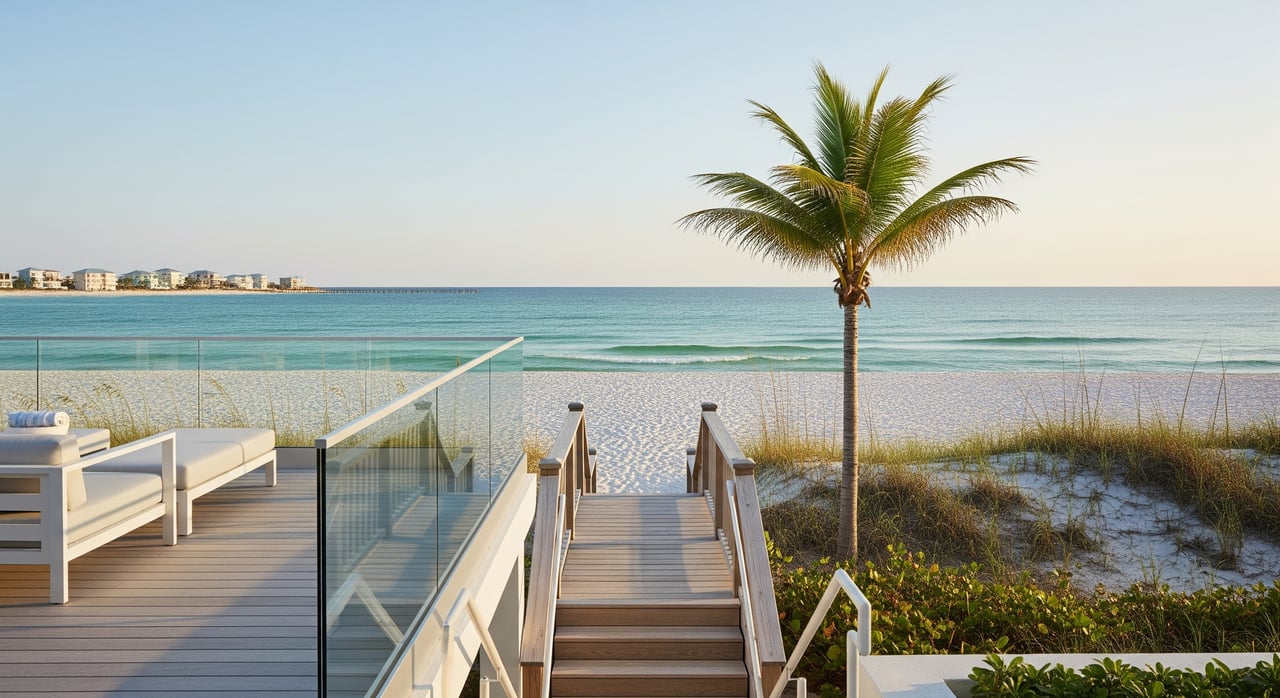
Trying to choose between a gulf-front and a gulf-view place in Indian Rocks Beach? You’re not alone. The terms sound similar, but they shape your daily experience, your privacy, and your budget in meaningful ways. In this guide, you’ll learn clear definitions, what to look for in photos and maps, how access and insurance differ, and the key due-diligence steps to take before you tour. Let’s dive in.
Quick definitions
Gulf-front
- The building faces and physically borders the Gulf of Mexico with no public road or property between you and the sand.
- You typically get immediate beach access from the property and an unobstructed seaward outlook.
- Ask: Is there private or deeded access? Is there a public walkover in front? Where is the lot relative to the mean high-water line?
Gulf-view
- You can see the Gulf from windows or a balcony, but the property is not directly on the water.
- Views may be partial, angled, or direct. Terms like “unobstructed” or “partial” are marketing language, so confirm the actual sightline.
Beach access
- Indicates there is a way to reach the beach from the property or community. It may be a public city access, a private walkway, or a deeded easement.
- “Deeded” or “private” access implies recorded rights. Confirm through the deed or HOA documents.
Across the street / one lot back
- There is a road or another lot between the property and the sand. You may still have a view, but access, noise, and privacy differ from true gulf-front.
What you actually see
A beautiful view comes down to placement and angle.
- Floor level: Higher floors often have wider and more consistent views above dunes or neighboring roofs.
- Orientation: West-facing units capture sunsets. Southwest or northwest can affect how long evening light lingers inside.
- Corner vs interior: Corner units often have broader angles and more glass, which can increase both view and light.
- Setbacks and dunes: Wider dunes can add privacy but may affect the feel of “right on the sand.”
If a listing claims “unobstructed,” remember that refers to the current sightline. It does not guarantee future conditions. Always verify with photos, maps, and a site visit at different times of day.
Access and privacy
How you reach the sand shapes your daily routine and your sense of privacy.
- Gulf-front: Look for whether the access path is private or public. A public walkover directly in front can increase foot traffic and noise, especially in high season.
- Gulf-view / across street: You’ll typically cross Gulf Boulevard or a side street to reach a public access point. Expect more vehicle and pedestrian activity.
- Deeded access: A deeded or HOA-controlled path can streamline your walk to the beach and reduce pass-through traffic.
In Indian Rocks Beach, public access points are common and beloved by locals and visitors. For locations and city rules, consult the City of Indian Rocks Beach.
Photos and maps to request
Before you tour, ask the listing agent for visuals that make the gulf-front vs gulf-view difference clear.
Property-level photos
- Front elevation from the beach side for gulf-front properties.
- Street-side view showing any road, parking, or lots between the building and the sand.
- Balcony and living room views at different times of day to reveal angle, glare, and quality of the view.
- Wide shots that include neighboring buildings and spacing.
Context maps
- Aerial or satellite image showing building footprint, any intervening road, and distance to the waterline.
- Parcel map with lot lines and the property address.
- Flood zone panel and Base Flood Elevation from the FEMA Flood Map Service Center.
Line-of-sight diagrams
- A simple sketch of the unit’s location in the building and which direction it faces. This helps decode “partial” vs “direct” view language.
Access illustrations
- Photos of the beach access path or walkover, with any signage showing public vs private.
- Photos of beach width and dune conditions, which affect privacy and usable sand.
These visuals reduce surprises and help you compare listings apples to apples.
Costs, risk, and insurance
Gulf-front and gulf-view properties can live differently on your balance sheet.
- Insurance and flood risk: Gulf-front properties often sit in higher-risk FEMA flood zones and lower elevations, which can mean higher flood insurance premiums. Confirm the flood zone and elevation, then obtain quotes based on the specific property using the FEMA Flood Map Service Center.
- HOA dues and maintenance: Gulf-front condo dues may be higher due to beachfront infrastructure, storm-related maintenance, and insurance.
- Special assessments: Ask about assessments connected to beach renourishment or dune stabilization. For broader context on shoreline projects, review the Florida Department of Environmental Protection’s beach management resources.
Pricing tradeoffs
You’ll generally pay a premium for true gulf-front because direct frontage is scarce and highly desirable for both lifestyle and potential rental income. Gulf-view or across-street homes deliver many of the same lifestyle wins at lower buy-in, but with tradeoffs like crossing a road, reduced privacy, or more varied view angles.
Premiums vary by building, floor, orientation, condition, rental policy, and market timing. Rather than assume a fixed percentage, compare recent sales of similar units in Indian Rocks Beach to quantify value.
Buyer due diligence
Use this checklist to confirm what a listing promises and what it actually delivers.
Future development checks
Views are not legally guaranteed. To understand risk, confirm what could be built on adjacent parcels.
- Review local zoning and maximum heights for the beachfront area.
- Look up recent or pending permits for neighboring lots.
- Note any vacant parcels west of Gulf Boulevard or between you and the shore.
- Recheck sightlines after sunset and at mid-day when glare and reflections can change what you see from inside.
How I can help
Choosing between gulf-front and gulf-view is about matching your lifestyle priorities to the right property and verifying the details. I help you:
- Shortlist the right buildings and blocks based on your privacy, access, and view goals.
- Secure aerials, flood data, HOA docs, and elevation details early so you can move fast.
- Tour efficiently with curated live or video showings that highlight view corridors, walkovers, and beach width at your preferred times of day.
- Compare recent sales and rental policies to understand true value and income potential.
- Negotiate with confidence using data, inspections, and verified documentation.
If you’re ready to explore Indian Rocks Beach condos and cottages, I would love to guide you. Reach out to Hope Kent to start your short list and schedule a tour.
FAQs
What does “gulf-front” mean in Indian Rocks Beach?
- Gulf-front means the building directly borders the Gulf of Mexico with no road or separate lot between you and the sand, offering immediate beach access and a seaward outlook.
How is “gulf-view” different from gulf-front day to day?
- Gulf-view offers a visible sightline to the Gulf but may require crossing a road for beach access and can have partial or angled views depending on floor and orientation.
How do I confirm deeded beach access on a condo?
- Ask for the deed and HOA documents to verify recorded easements and access rights; your agent can obtain and review these with you before you make an offer.
Are flood insurance costs usually higher for gulf-front?
- Often yes, because gulf-front properties are commonly in higher-risk FEMA zones and lower elevations; confirm with flood panels, an elevation certificate, and insurance quotes.
Can new construction block my view later?
- Possibly; views are not guaranteed, so check city zoning, allowed heights, and recent permit activity for nearby parcels before you buy.
What should I review before touring a unit?
- Request an aerial or parcel map, balcony-view photos, floor plan and orientation, flood zone and elevation data, HOA rules and fees, and any known assessments or structural updates.